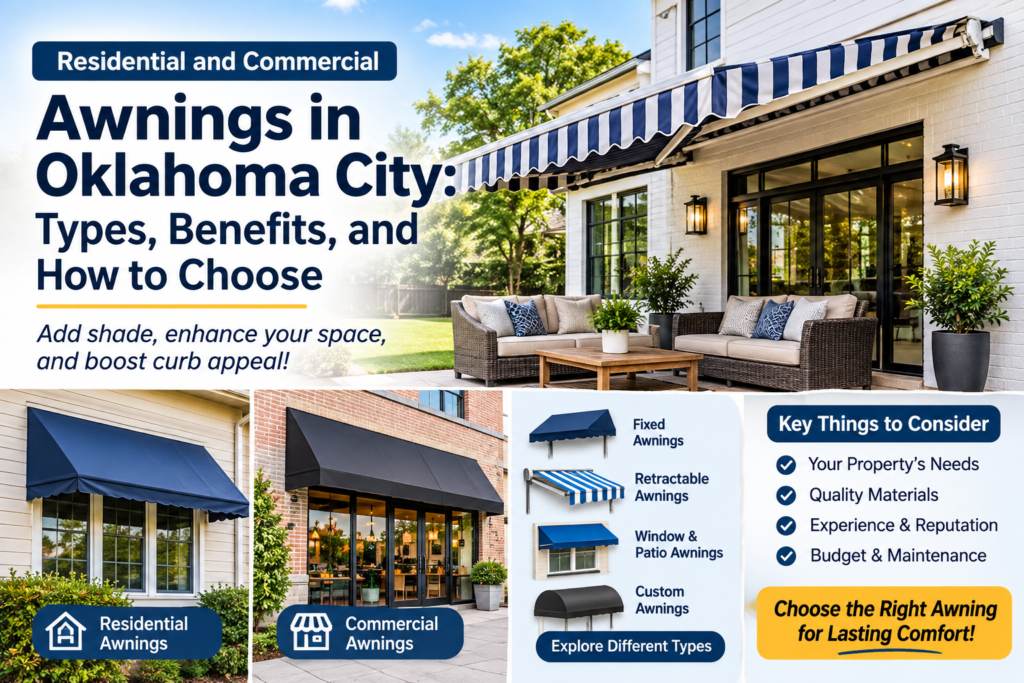
Awnings can make an outdoor space more comfortable, provide shade near windows and entrances, and give a property a more finished appearance. For homeowners, an awning might mean a more usable patio or less direct sunlight entering a room. For business owners, it can help create a more welcoming entrance or provide shade for outdoor seating.
However, choosing an awning is not simply a matter of selecting a color or design. The right solution depends on the property’s layout, intended use, materials, installation requirements, maintenance needs, and budget.
If you are searching for an awning company in Oklahoma City, understanding these factors can help you compare your options and make a decision that suits your property.
Why Consider Installing an Awning?
An awning is a covering installed over an area such as a window, doorway, patio, or storefront. Depending on its design and material, it can provide shade, reduce direct sun exposure, and offer some protection from light rain.
For homes, awnings can help make patios and decks more comfortable during sunny weather. Window awnings may also reduce the amount of direct sunlight entering certain rooms, although the actual effect on indoor temperatures depends on the window orientation, glazing, awning design, and other building features.
Commercial properties can benefit in different ways. An awning above a shop entrance can make the doorway more noticeable, while a suitably designed cover over an outdoor dining area can provide shade for customers.
It is important to keep expectations realistic. An awning does not make a property completely weatherproof, and its performance depends on the design, installation, material, and conditions in which it is used.
Understanding Different Types of Awnings
Before contacting an installer, consider how you intend to use the covered area. Different awning styles serve different purposes, and the most suitable choice depends on the structure and the amount of coverage required.
1. Fixed Awnings
Fixed awnings remain in one position after installation. They are commonly used over windows, doors, walkways, and certain outdoor areas.
Their main advantage is that they provide consistent coverage without requiring regular operation. Depending on the material and construction, they can also complement a property’s architectural style.
Before choosing a fixed design, consider how it will handle local weather conditions, whether it will obstruct nearby windows or doors, and what maintenance it will require.
2. Retractable Awnings
Retractable awnings can be extended when shade is needed and folded away when it is not. Some models operate manually, while others use an electric motor.
They can be useful for patios and decks where sunlight preferences change throughout the day. However, retractable systems have moving components that may require periodic inspection and maintenance.
Always follow the manufacturer’s instructions regarding wind, rain, and other weather limitations. Retracting an awning during unsuitable conditions can help prevent damage, but the permitted operating conditions vary by model.
3. Residential Window and Patio Awnings
Residential awnings are designed for homes and may be installed above windows, entryways, balconies, patios, or decks.
When evaluating residential awnings, consider the direction of sunlight, the dimensions of the area, the building’s exterior materials, and the appearance of the finished installation.
Fabric awnings offer a range of colors and patterns, while metal options may suit homeowners looking for a different appearance or a more rigid covering. Neither material is automatically the best choice for every property; the intended use and manufacturer’s specifications matter.
4. Commercial and Custom Awnings
Commercial awnings are designed for business premises, including retail stores, restaurants, offices, and other commercial buildings.
A commercial awning company may help businesses assess the dimensions of an entrance, the visibility of a storefront, the requirements of an outdoor seating area, and the practical limitations of the building.
Businesses looking for custom awnings for business use should consider more than appearance alone. The design may need to accommodate signage, customer access, building features, lighting, or particular installation constraints.
Custom work can offer a better fit for unusual dimensions or specific design requirements, but it may also involve additional design, fabrication, and installation costs.
What to Consider When Choosing an Awning Company
Finding an awning installer is easier when you know which questions to ask. Rather than comparing companies on price alone, evaluate the proposed solution and the information provided with the estimate.
Experience With Your Type of Project
Residential and commercial installations can have different requirements. A small window awning is not the same project as a large storefront installation or a covered restaurant patio.
Ask whether the company has completed projects similar to yours. Examples of previous work can help you assess the finish, design approach, and range of installations the company has handled.
Materials and Construction
The material affects the appearance, maintenance requirements, and expected service life of an awning.
Fabric options can offer flexibility in color and style, while metal constructions provide a different combination of appearance, rigidity, and maintenance needs. Fabric quality, frame construction, coatings, fasteners, and exposure to weather all influence performance.
Ask for information about the specific materials being proposed, their care requirements, and any available manufacturer warranties. Avoid relying on general claims about durability without checking the specifications for the actual product.
Installation and Structural Suitability
A well-chosen awning still needs to be installed correctly. The supporting wall, attachment points, frame, and mounting hardware must be appropriate for the design and the loads the installation may experience.
This consideration is particularly important for large awnings and structures exposed to strong winds. Oklahoma weather can include severe thunderstorms and high winds, so ask the installer how the proposed system is intended to be used safely in local conditions.
For larger or more complex installations, ask whether structural assessments or additional approvals may be necessary.
Written Estimates and Warranty Details
Request a written estimate that explains what is included in the quoted price. Depending on the project, this may cover measurements, materials, fabrication, installation, electrical work for motorized systems, and removal of an existing awning.
Check whether delivery, permits, repairs to the mounting surface, and future maintenance are included or charged separately.
A lower initial price is not necessarily the most economical option if the proposal uses unsuitable materials or leaves important work out of the scope. At the same time, a higher price does not automatically guarantee better quality. Compare the specifications, workmanship, warranty terms, and total project cost.
Local Knowledge and Communication
When searching online for an awning near me, proximity can be useful, particularly if you need measurements, installation, or future service.
However, location alone should not determine your choice. Confirm the company’s service area, availability, communication process, and experience with your type of property.
A dependable contractor should be able to explain the available options, identify relevant limitations, and provide a clear outline of the next steps.
Choosing Awnings for Oklahoma City Weather
Local weather deserves attention when planning an awning installation in Oklahoma City. Hot, sunny periods can make shade valuable, while strong winds, thunderstorms, and seasonal weather changes can affect the suitability and maintenance of an outdoor covering.
Before selecting a system, consider the following:
- Sun exposure: Identify when the patio, windows, or entrance receives the most direct sunlight.
- Wind conditions: Ask about the product’s wind limitations, mounting requirements, and recommended precautions.
- Rainwater drainage: Check that the design and installation allow water to drain appropriately and discourage pooling.
- Seasonal care: Find out whether the awning should be retracted, covered, cleaned, or inspected at particular times of year.
- Building requirements: Confirm whether the structure can support the proposed installation and whether local approvals are needed.
Do not assume that a heavy-duty appearance guarantees resistance to severe weather. Follow the manufacturer’s ratings and instructions for the exact system being installed.
You should also confirm local requirements before construction begins. The City of Oklahoma City’s Building and Trade Permits guidance explains when permits may be required and provides contact information for questions about specific projects. Requirements depend on the structure and circumstances, so check with the relevant city department rather than assuming every awning installation follows the same rules.
How Much Does an Awning Cost?
There is no single price that applies to every awning installation. The final cost depends on the size, material, design, mounting surface, installation complexity, and any additional features.
For example, a basic window awning will generally involve different materials and labor from a large custom commercial structure. A motorized retractable system may also cost more than a comparable manual model because it includes additional equipment.
When requesting a quote, provide the installer with the approximate dimensions, intended use, preferred style, and any specific requirements. If possible, obtain comparable written estimates from more than one provider.
Rather than asking only for the lowest price, compare:
- The exact awning model and materials.
- The dimensions and amount of coverage.
- Installation and mounting details.
- Warranty coverage and exclusions.
- Maintenance requirements and any additional charges.
This approach gives you a clearer understanding of what you are paying for and helps you avoid comparing proposals that offer different levels of coverage or quality.
Common Mistakes to Avoid When Buying an Awning
A little preparation can prevent problems after installation.
Choosing based only on appearance: A design may look attractive but provide insufficient shade for the area you want to cover. Evaluate its dimensions, orientation, and intended use.
Ignoring weather limitations: No awning should be assumed to withstand every wind or storm condition. Check the manufacturer’s operating instructions before making a purchase.
Overlooking maintenance: Fabric, metal, frames, and moving components may have different cleaning and inspection requirements. Understand these before choosing a system.
Accepting an unclear quote: Make sure the estimate explains the materials, installation work, warranty, and additional costs.
Failing to check installation requirements: The mounting surface, building layout, and applicable local rules may affect which options are suitable.
Expecting guaranteed energy savings: Window awnings may reduce direct solar heat gain in some situations, but actual energy savings depend on the building, climate, window characteristics, and how the awning is used. Ask for evidence before relying on a specific savings estimate.
Making an Informed Awning Decision in Oklahoma City
Choosing the right awning begins with understanding your property’s needs. Consider how much shade you require, how the structure will be used, which materials are appropriate, and what the installation will involve. A clear comparison of product specifications, written estimates, and maintenance requirements can help you make a more informed decision.
For homeowners and business owners researching local options, The Awning Company and Scissortail Shade Company LLC are names to consider when exploring awning solutions in the Oklahoma City market. Before selecting a provider, review the services each offers, confirm that they can meet your project’s requirements, and request details about materials, installation, warranties, and costs.
Ultimately, the best awning is not necessarily the most expensive or the most elaborate. It is the one that fits your property, performs as intended, meets applicable requirements, and suits your budget over the long term.
Frequently Asked Questions About Awning Companies in Oklahoma City
1. How do I choose the right awning company in Oklahoma City?
Choose an awning company based on its experience with similar projects, material options, installation process, written estimates, and warranty terms. Ask questions about maintenance and weather suitability before making a decision. Comparing multiple quotes can also help you understand the differences in pricing and services.
2. What should I consider when searching for an awning near me?
When searching for an awning near me, check whether the company serves your area and offers the type of awning you need. Review its previous work, compare available materials, and ask about installation costs, warranty coverage, and ongoing maintenance requirements.
3. What is the difference between residential and commercial awnings?
Residential awnings are commonly installed over home windows, patios, decks, and entryways. Commercial awnings are designed for properties such as retail stores, restaurants, and offices. Commercial projects may require larger structures, storefront signage integration, or additional planning for customer access and building requirements.
4. Are custom awnings a good option for businesses?
Custom awnings can be a practical option when a standard design does not fit a building’s dimensions or functional requirements. Businesses can plan the size, shape, material, and appearance around their property. Before ordering, compare the estimated cost, installation requirements, maintenance needs, and expected performance with standard alternatives.
5. Which awning materials are best for Oklahoma City weather?
The best material depends on the intended use, sun exposure, wind conditions, and maintenance preferences. Fabric awnings offer a wide range of colors and styles, while metal awnings provide a different appearance and construction. Ask the installer about material specifications, frame strength, weather limitations, and manufacturer care instructions before choosing.
6. How much does it cost to install a residential or commercial awning?
Awning installation costs vary according to size, materials, design, mounting requirements, and installation complexity. Motorized systems and custom commercial structures may involve additional expenses. Request a written estimate that clearly identifies the materials, labor, installation work, warranty, and any additional charges.
7. Can installing an awning help reduce indoor temperatures?
An awning positioned over a window can reduce direct sunlight and solar heat gain in suitable conditions. The results depend on window orientation, glazing, coverage, and the local climate. Although an awning may improve comfort, energy savings are not guaranteed and vary from one property to another.
8. Do retractable awnings require more maintenance than fixed awnings?
Retractable awnings have moving parts that may require periodic inspection in addition to routine cleaning. Fixed awnings have fewer moving components but still need care based on their materials and exposure to the elements. Follow the manufacturer’s maintenance instructions for the specific product.
9. How do I know whether an awning will fit my property?
Consider the available mounting space, desired coverage, building materials, door and window placement, and the direction of sunlight. A professional measurement can help determine suitable dimensions and identify potential installation issues before the awning is ordered.
10. Do I need a permit to install an awning in Oklahoma City?
Permit requirements depend on the type of installation, the property, and the scope of work. Some projects may require additional review. Contact the City of Oklahoma City or the relevant local authority to confirm the requirements for your specific installation before work begins.
11. How long does an awning typically last?
An awning’s service life depends on its materials, construction quality, installation, maintenance, and exposure to weather. Fabric condition, frame corrosion, fastener wear, and damage from severe weather can affect longevity. Ask the manufacturer or installer about expected service life and warranty coverage for the specific model.
12. Where can I find residential and commercial awning solutions in Oklahoma City?
Start by researching local providers that offer the type of installation you need. Compare their product options, previous projects, written estimates, and warranty terms. The Awning Company and Scissortail Shade Company LLC are names to investigate when researching awning options in the Oklahoma City market; confirm each company’s current services and service area directly before proceeding.